Buying Guides ·
How to Choose a Chaff Cutter: Capacity, Power and Blade Guide
Work out the capacity you really need, pick the right power source and blade system, and avoid the five most common chaff cutter buying mistakes.
Read articleBuying Guides
Compare compact, high-capacity and multi-crop maize shellers, understand breakage and cleaning rates, and size a machine to your harvest.
Quick answer
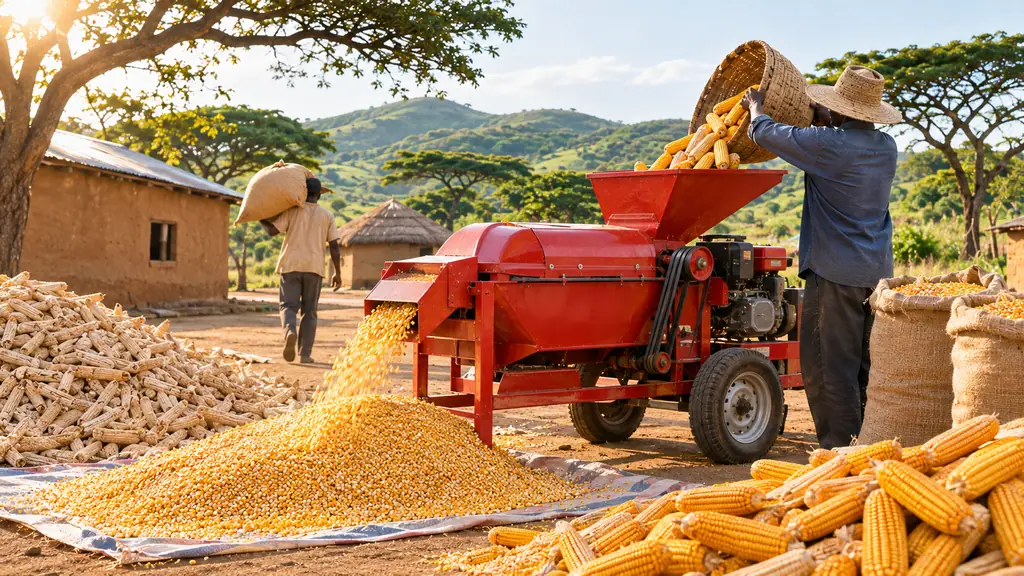
For under 10 tonnes per season, a portable 800–1200 kg/h electric sheller is enough. Cooperatives and service providers should choose 1.5–3 t/h threshers; if you also grow sorghum, millet or soybean, a multi-crop thresher avoids buying several machines. Shell cobs at 13–15% moisture to minimise kernel breakage.
Moisture is the biggest factor — cobs at 13–15% moisture shell cleanly; wetter cobs crush, drier kernels crack. Drum speed and concave clearance should be adjusted to cob size. A built-in fan removes chaff so grain is ready for bagging.
| Season volume | Recommended |
|---|---|
| Up to 10 t | 800–1200 kg/h compact sheller |
| 10–100 t | 1.5 t/h thresher |
| 100 t + / service business | 2.5–3 t/h or multi-crop thresher, diesel |
Standard shellers need husks removed. If husking is your bottleneck, a husker-sheller removes husks and shells in one pass.
Need advice?
Describe your situation and we'll recommend equipment — free, within one working day.
Keep reading
Buying Guides ·
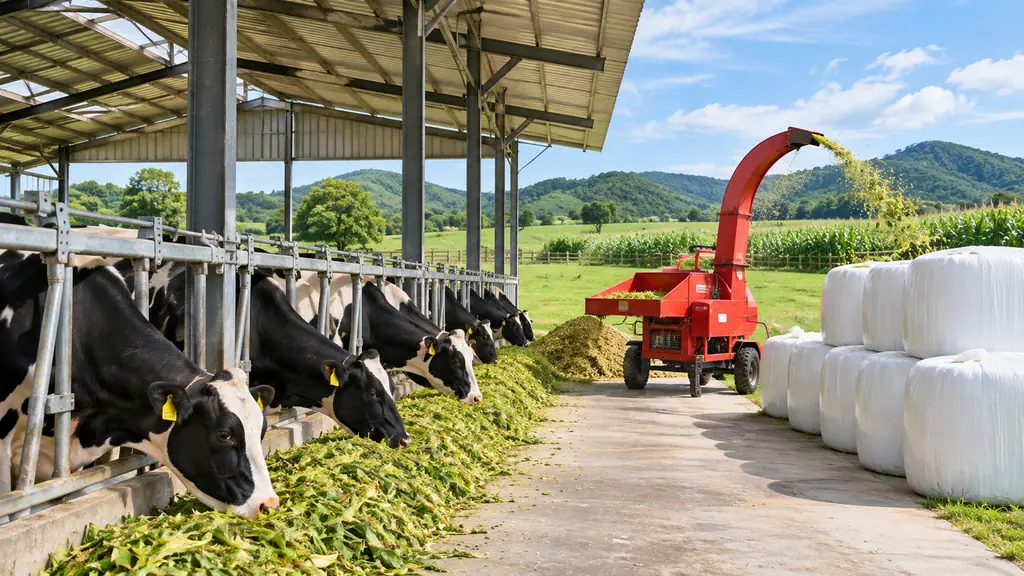
Work out the capacity you really need, pick the right power source and blade system, and avoid the five most common chaff cutter buying mistakes.
Read article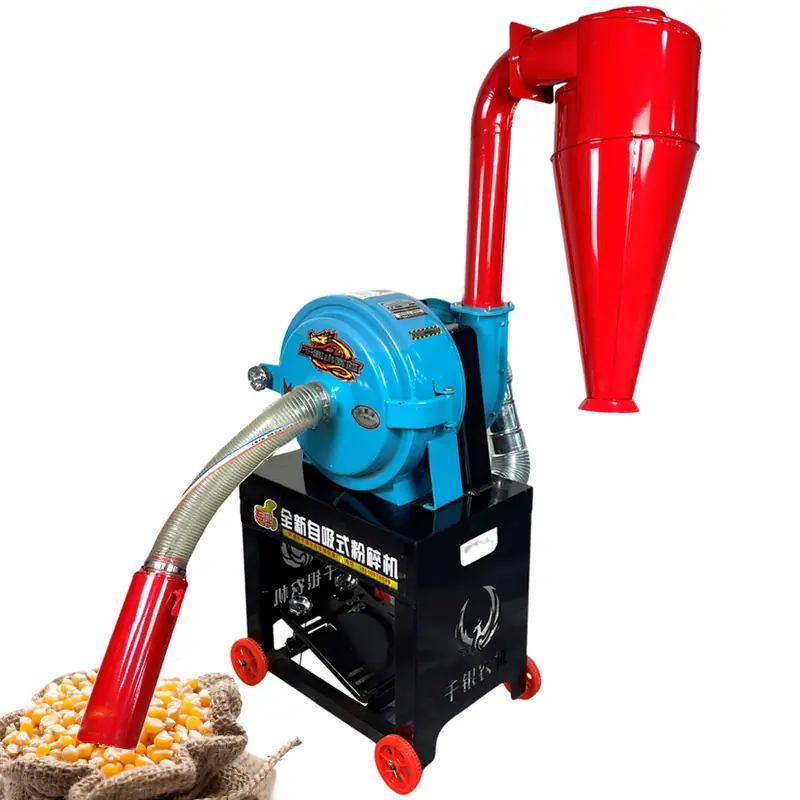
Feed Processing ·
How hammer mills and roller crushers work, what particle sizes they produce, and which animals and feed types each one suits.
Read article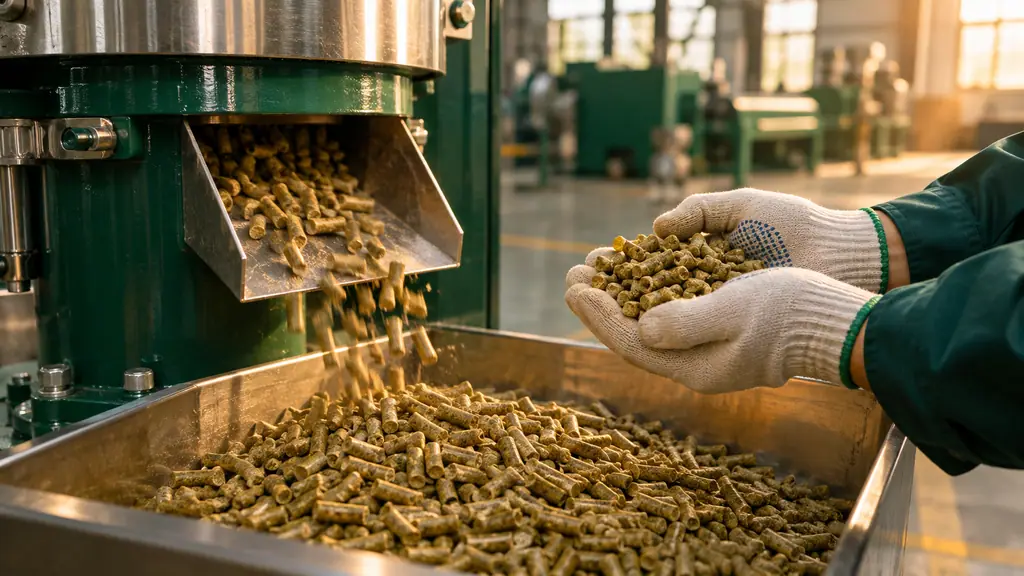
Feed Processing ·
The machines, floor plan, power supply and process steps for a 300 kg/h to 2 t/h animal feed pellet plant.
Read article