Buying Guides ·
How to Choose a Chaff Cutter: Capacity, Power and Blade Guide
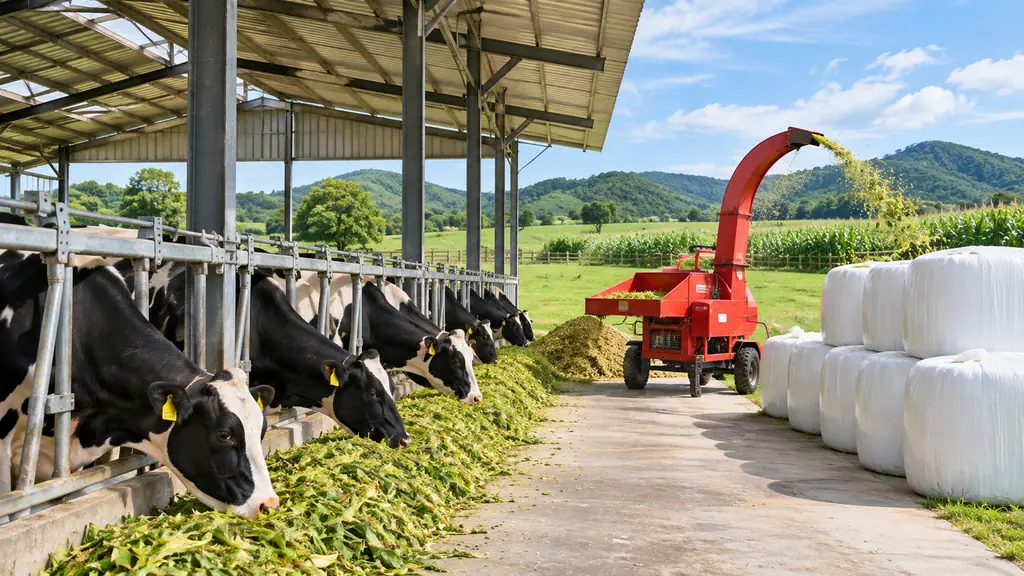
Work out the capacity you really need, pick the right power source and blade system, and avoid the five most common chaff cutter buying mistakes.
Read articleFeed Processing
How hammer mills and roller crushers work, what particle sizes they produce, and which animals and feed types each one suits.
Quick answer
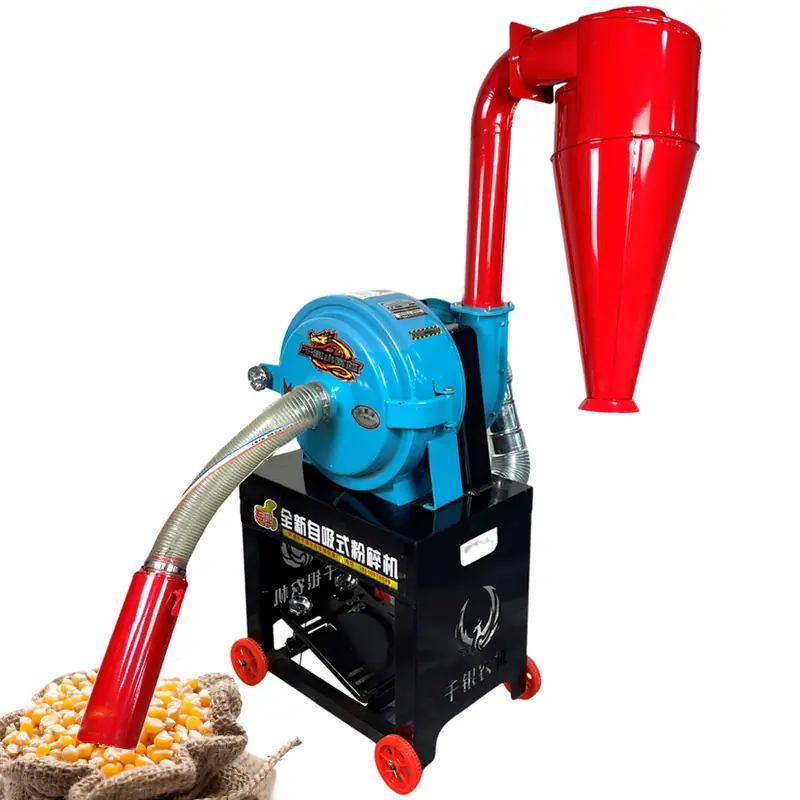
A hammer mill is the more versatile choice: it grinds grain, straw and dry forage to any fineness by changing the screen. A roller mill (corn cracker) is better when you want uniform cracked grain with very little dust — for poultry scratch feed, calf starter or steam flaking.
Hammer mills spin free-swinging hammers at high speed. Material is shattered by impact until it passes through a perforated screen; the screen hole size controls particle size. Roller mills squeeze grain between two (or more) grooved rollers; the roller gap controls how coarsely kernels are cracked.
| Factor | Hammer mill | Roller mill |
|---|---|---|
| Materials | Grain, straw, hay, dry roughage | Grain only |
| Particle size | Fine flour to coarse meal | Cracked to rolled |
| Uniformity | Wider size distribution | Very uniform |
| Dust / fines | Higher (use a cyclone) | Low |
| Energy per tonne | Higher | Lower |
| Wear parts | Hammers, screens | Rollers |
Keep grain moisture below about 14% for efficient grinding. Fit a cyclone or bag filter to a hammer mill used indoors. Rotate or flip hammers when one edge wears to maintain capacity, and keep a set of spare screens in your most-used sizes.
Need advice?
Describe your situation and we'll recommend equipment — free, within one working day.
Keep reading
Buying Guides ·
Work out the capacity you really need, pick the right power source and blade system, and avoid the five most common chaff cutter buying mistakes.
Read article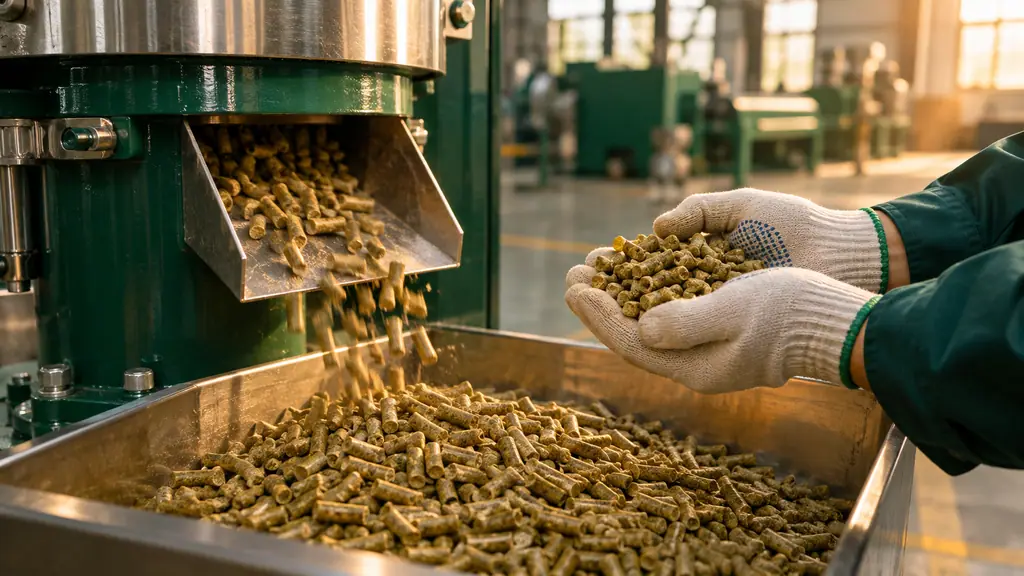
Feed Processing ·
The machines, floor plan, power supply and process steps for a 300 kg/h to 2 t/h animal feed pellet plant.
Read article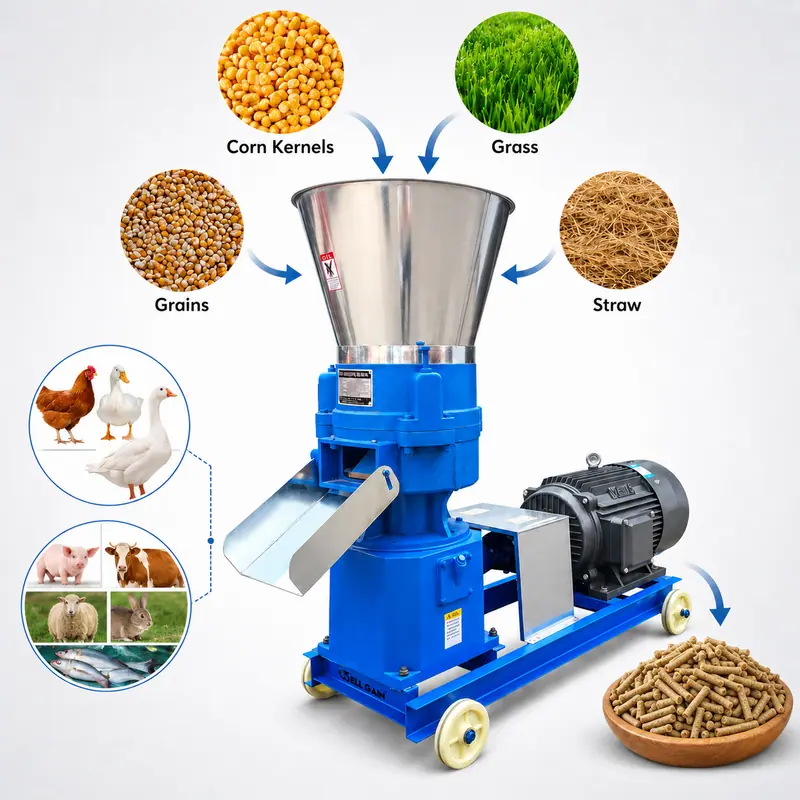
Feed Processing ·
Recommended pellet diameters for chicks, layers, broilers, rabbits, pigs, sheep, cattle and fish — plus how die thickness affects pellet hardness.
Read article