Buying Guides ·
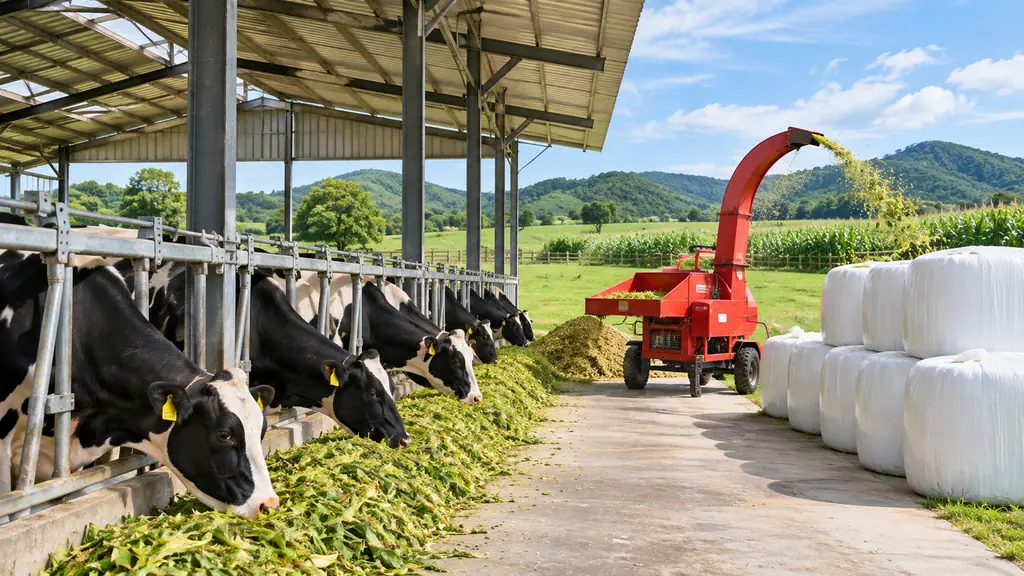
How to Choose a Chaff Cutter: Capacity, Power and Blade Guide
Work out the capacity you really need, pick the right power source and blade system, and avoid the five most common chaff cutter buying mistakes.
Read articleFeed Processing
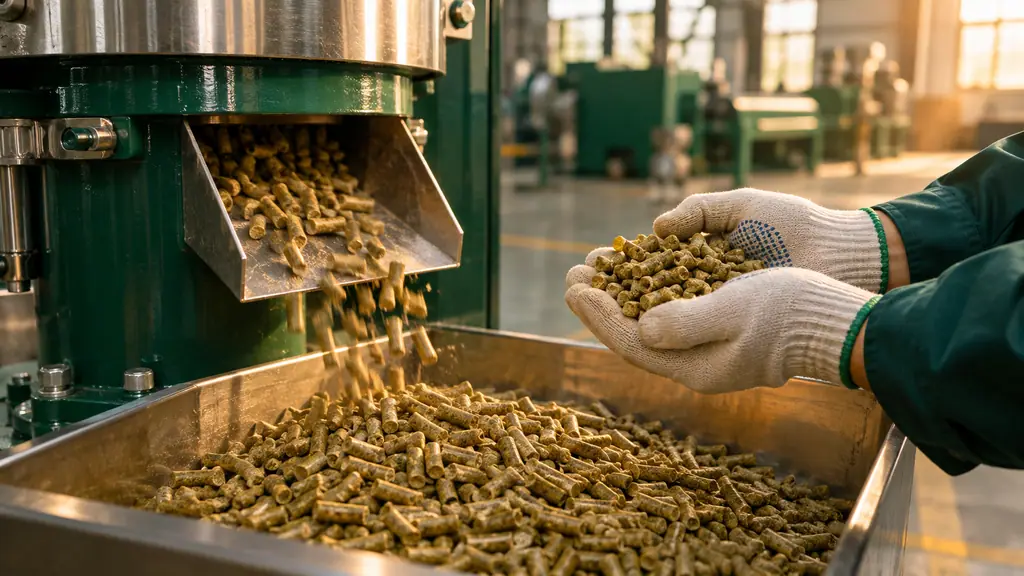
The machines, floor plan, power supply and process steps for a 300 kg/h to 2 t/h animal feed pellet plant.
Quick answer
A small feed pellet plant needs five steps: grinding (hammer mill), mixing (vertical mixer), conveying (screw auger), pelleting (flat-die pellet mill) and cooling/bagging. A 1 t/h line typically needs about 120 m² of floor space, 40–50 kW of installed power and two operators.
| Target output | Pellet mill | Hammer mill | Typical use |
|---|---|---|---|
| 100–200 kg/h | Model 150 / 160 | 300–600 kg/h | Own farm, rabbits, small poultry |
| 400–800 kg/h | Model 210 / 260 | 1–1.35 t/h | Commercial farm, village feed shop |
| 1.5–2 t/h | Model 400 or 2 × 260 | 1.5 t/h | Small feed mill |
Size the hammer mill at roughly 1.5× pellet mill capacity, because grinding throughput drops with fine screens.
Hard, durable pellets come from correct particle size, conditioning moisture, die compression ratio and fresh rollers. If pellets crumble, check moisture first, then die wear. Starch-rich formulas pellet more easily than high-fibre ones.
Send us your target species, daily output and available power. We will propose a line layout with equipment list and installed power within two working days.
Need advice?
Describe your situation and we'll recommend equipment — free, within one working day.
Keep reading
Buying Guides ·
Work out the capacity you really need, pick the right power source and blade system, and avoid the five most common chaff cutter buying mistakes.
Read article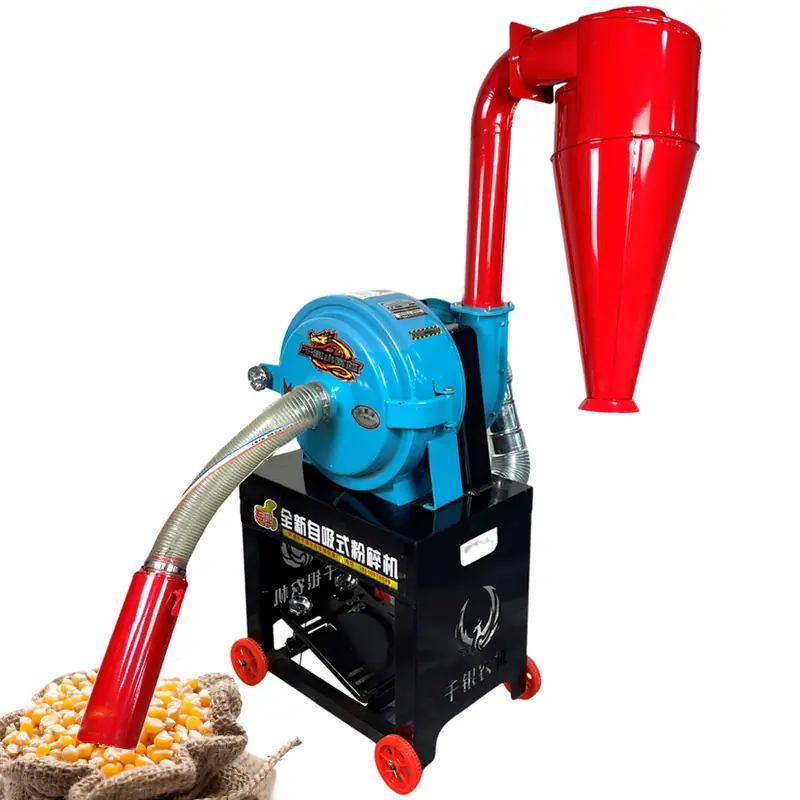
Feed Processing ·
How hammer mills and roller crushers work, what particle sizes they produce, and which animals and feed types each one suits.
Read article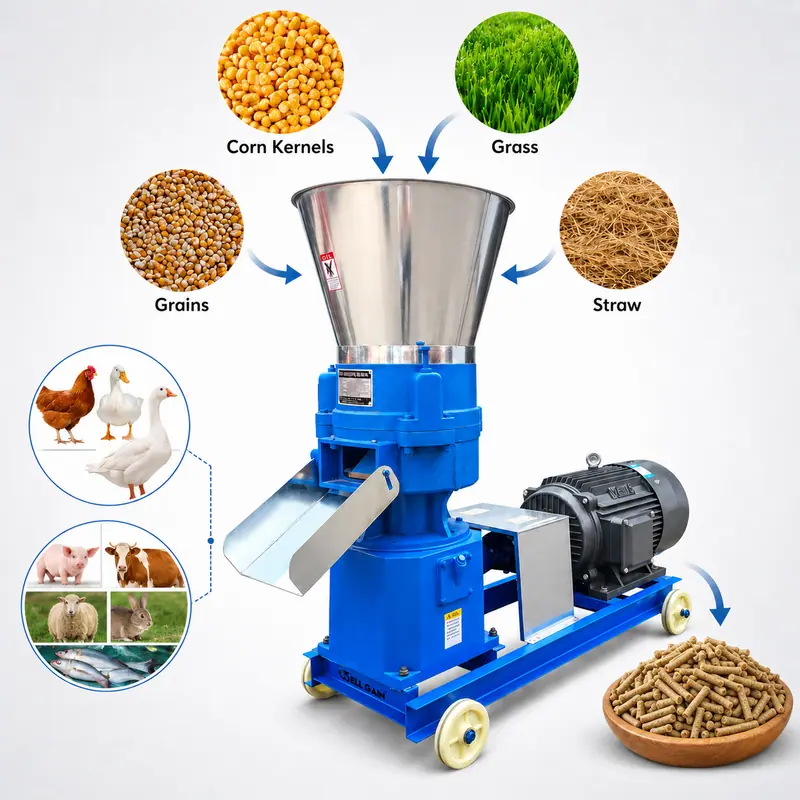
Feed Processing ·
Recommended pellet diameters for chicks, layers, broilers, rabbits, pigs, sheep, cattle and fish — plus how die thickness affects pellet hardness.
Read article