Buying Guides ·
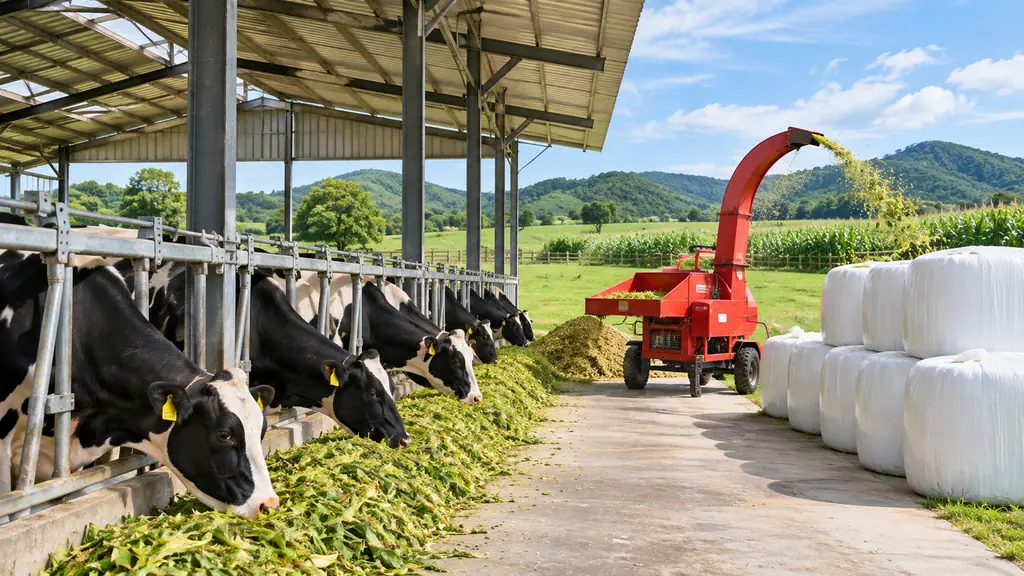
How to Choose a Chaff Cutter: Capacity, Power and Blade Guide
Work out the capacity you really need, pick the right power source and blade system, and avoid the five most common chaff cutter buying mistakes.
Read articleFeed Processing
Recommended pellet diameters for chicks, layers, broilers, rabbits, pigs, sheep, cattle and fish — plus how die thickness affects pellet hardness.
Quick answer
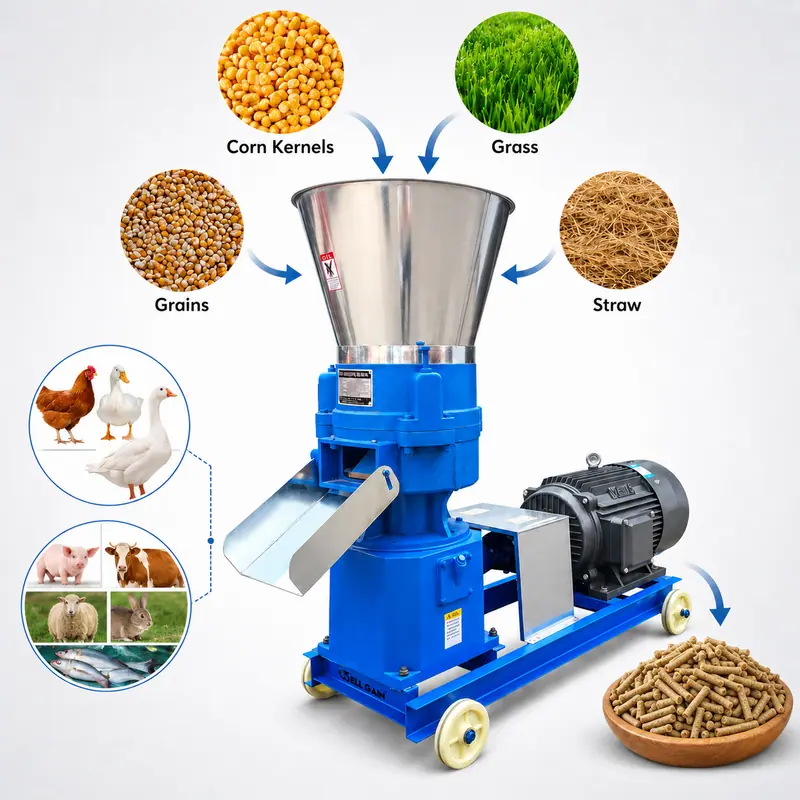
Use 2–2.5 mm pellets for chicks and fish fry, 3–4 mm for layers and broilers, 4–5 mm for rabbits, 4–6 mm for pigs and sheep, and 6–8 mm for cattle. Thicker dies (higher compression ratio) produce harder pellets.
| Animal | Pellet diameter | Notes |
|---|---|---|
| Chicks, quail | 2–2.5 mm | Often crumbled after pelleting |
| Broilers, layers | 3–4 mm | 4 mm for finisher |
| Ducks, geese | 4–5 mm | |
| Rabbits | 4–5 mm | High-fibre formula, firm pellet |
| Pigs | 4–6 mm | |
| Sheep, goats | 4–6 mm | |
| Cattle | 6–8 mm | |
| Fish | 1.5–6 mm | Grow with fish size; stainless mill preferred |
The compression ratio is die thickness divided by hole diameter. Higher ratios press longer and make harder pellets but reduce throughput and need more power. High-fibre materials such as grass meal need lower ratios; starch-rich grain formulas tolerate higher ratios.
Flat-die mills let you change dies in under 30 minutes. Many customers keep two or three dies — for example 3 mm for poultry and 6 mm for cattle — and switch according to orders.
Need advice?
Describe your situation and we'll recommend equipment — free, within one working day.
Keep reading
Buying Guides ·
Work out the capacity you really need, pick the right power source and blade system, and avoid the five most common chaff cutter buying mistakes.
Read article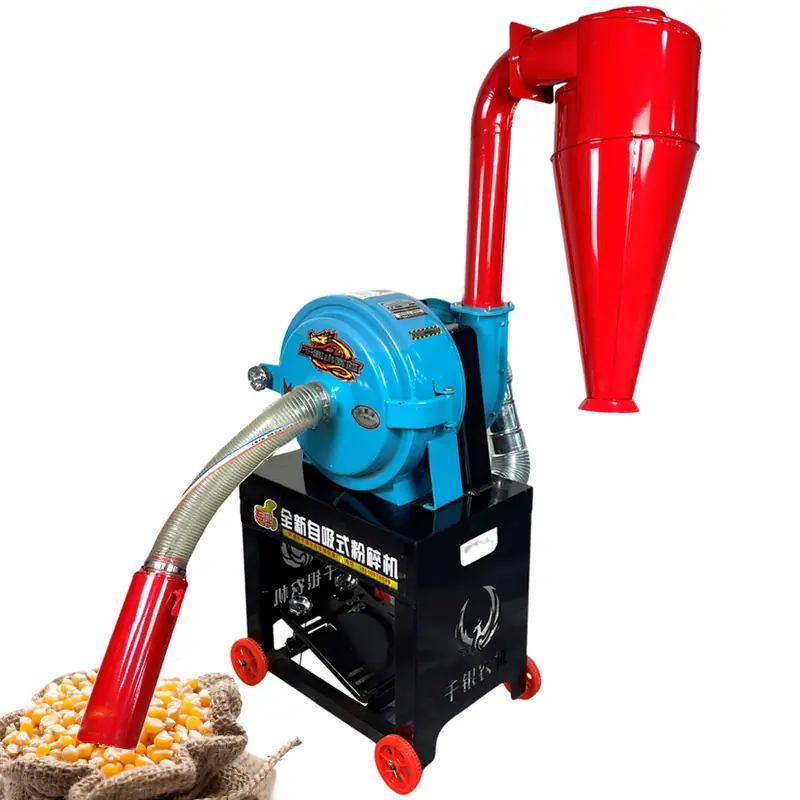
Feed Processing ·
How hammer mills and roller crushers work, what particle sizes they produce, and which animals and feed types each one suits.
Read article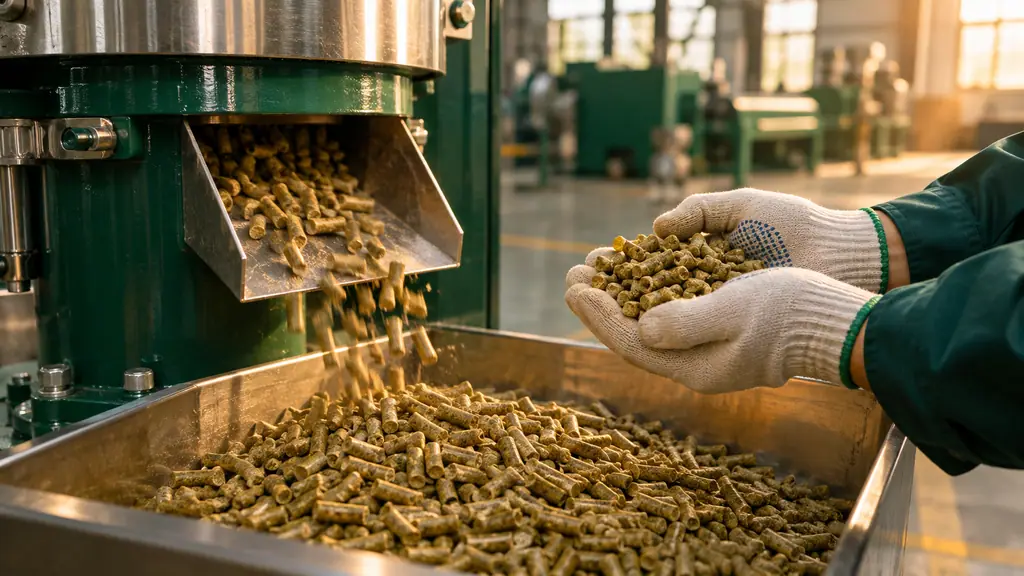
Feed Processing ·
The machines, floor plan, power supply and process steps for a 300 kg/h to 2 t/h animal feed pellet plant.
Read article